Showing posts with label Culture. Show all posts

Incense Burner Made From Bronze — Perfect for Rituals and Spiritual Awakening

 incense burner, bronze incense burner, zinc alloy incense holder, spiritual cleansing tools, ritual tools Philippines, incense coil holder, Shopee incense burner, mystical home decor, spiritual awakening tools, meditation incense burner, aromatherapy burner, sandalwood incense holder, mini incense burner, small space altar tools, micro-living spiritual tools, energy cleansing ritual, bronze incense holder review, incense burner Philippines, ilovetansyong blog, Tansyong lifestyle blog

As someone who constantly seeks balance, grounding, and spiritual connection—especially while living the micro-living lifestyle—I'm always on the lookout for tools that elevate my rituals. Recently, I added a new favorite to my collection: a Bronze Alloy Incense Burner that I bought from Shopee for only ₱259.

This beautifully crafted burner instantly caught my attention, not only because of its intricate design but also because it perfectly fits my small space. Living in a compact unit means I need items that are functional, sturdy, and space-efficient—and this one checks all the boxes.

incense burner, bronze incense burner, zinc alloy incense holder, spiritual cleansing tools, ritual tools Philippines, incense coil holder, Shopee incense burner, mystical home decor, spiritual awakening tools, meditation incense burner, aromatherapy burner, sandalwood incense holder, mini incense burner, small space altar tools, micro-living spiritual tools, energy cleansing ritual, bronze incense holder review, incense burner Philippines, ilovetansyong blog, Tansyong lifestyle blog

🌿 Why I Bought It

I’ve always believed that incense burning is a powerful way to cleanse your energy, invite positivity, and awaken your spiritual senses. My old clay cauldron from Marinduque served me well, but I wanted something more durable and visually striking—something that looks mystical and feels intentional.

This bronze incense burner is exactly that. It’s perfect for burning incense coils, sticks, sandalwood powder, and even grains—making it a versatile addition to my cleansing tools.

incense burner, bronze incense burner, zinc alloy incense holder, spiritual cleansing tools, ritual tools Philippines, incense coil holder, Shopee incense burner, mystical home decor, spiritual awakening tools, meditation incense burner, aromatherapy burner, sandalwood incense holder, mini incense burner, small space altar tools, micro-living spiritual tools, energy cleansing ritual, bronze incense holder review, incense burner Philippines, ilovetansyong blog, Tansyong lifestyle blog

 Pros

  •  Sturdy & Long-lasting

Because it's made of zinc alloy, this burner feels solid and strong. It’s something that will last years, even with frequent spiritual use.

  •  Aesthetic & Mystical

The design is what truly captivated me. With detailed carvings and a metallic finish, it instantly adds a mystical vibe to any altar or corner of your home. It makes me feel more connected during my rituals—like my spiritual tools are truly extensions of my intentions.

  •  Perfect Size for Small Spaces

Not too big, not too small. It fits perfectly on my altar table without cluttering my micro-living setup.


incense burner, bronze incense burner, zinc alloy incense holder, spiritual cleansing tools, ritual tools Philippines, incense coil holder, Shopee incense burner, mystical home decor, spiritual awakening tools, meditation incense burner, aromatherapy burner, sandalwood incense holder, mini incense burner, small space altar tools, micro-living spiritual tools, energy cleansing ritual, bronze incense holder review, incense burner Philippines, ilovetansyong blog, Tansyong lifestyle blog

⚠️ Cons

  • It Heats Up Quickly

This is the biggest difference compared to my clay cauldron. Since the burner is made of metal, it becomes hot easily.

You cannot carry it with your bare hands to scatter the smoke—unless gusto mo masunog! I use a towel or cloth para safe. Unlike clay, metal conducts heat, so always be cautious.

  • Some Sharp Edges

Because it’s zinc alloy, there might be sharp parts around the legs or edges. Handle with care when opening the lid or moving it around.

🎥 WATCH THE VLOG:

🧘 My Takeaway

I might explore ceramic or clay incense burners again in the future, especially for usability. But for now, I’m completely in love with this bronze piece. It elevates the energy of my rituals, adds character to my altar, and makes me feel more grounded and connected.

For only ₱259, it’s definitely worth it.

🎇 Product Description (for your reference)

  • Suitable for incense sticks, coils, sandalwood grains, and powders
  • Best for incense coils with a diameter of 6.5–7 cm
  • Includes fireproof cotton (silver side down, black side up) for safety
  • Color and texture may vary slightly

CAUTION: Handle with care due to heat and potential sharp parts

If you also love cleansing rituals or want something that adds a spiritual touch to your home, this incense burner is a beautiful choice. Let me know if you want a review vlog about using it—I’d love to share more!

Where To Buy :

Namaste, Tansyong Lovers!

The Legend of Bernardo Carpio: An Investigative Dive into Filipino Folklore.

Bernardo Carpio,legend of Bernardo Carpio,Philippine folklore,Filipino culture,investigative journalism,University of Rizal System,historical myths,Philippine legends,Bernardo Carpio mystery,travel and history vlog,cultural heritage,folk stories of the Philippines,Bernardo Carpio story,Filipino myths and legends,local folklore,history and culture,exploring myths,Philippine travel vlog,historical investigation,Bernardo Carpio documentary.

 The legend of Bernardo Carpio has captivated Filipinos for centuries, symbolizing strength, resilience, and the enduring spirit of the nation. Rooted in the lore of the pre-colonial Philippines, Bernardo Carpio is depicted as a giant of extraordinary strength, tasked with holding apart two massive rocks in the mountains of Montalban (now Rizal) to prevent devastation. This tale, blending myth and reality, serves as both a cultural artifact and a source of intrigue for generations.

This investigative journalism project by students of the University of Rizal System delves into the enigma of Bernardo Carpio. By piecing together oral histories, documented accounts, and local folklore, the students uncover the layers of this legend. Interviews with historians reveal the possible historical influences behind the myth, such as the resistance movements against colonial powers. At the same time, locals share their stories and beliefs, keeping the legend alive within their communities.

Exploring key sites tied to Bernardo Carpio, such as the Montalban Gorge and the Wawa Dam, the students immerse themselves in the cultural and geographical settings of the tale. These places, with their breathtaking natural beauty and symbolic significance, serve as both a backdrop and a testament to the enduring legacy of the legend. The exploration reveals how these locations have become both a source of pride and a mystery for the locals, blending history and spirituality.

The legend of Bernardo Carpio is more than just a story; it’s a reflection of Filipino values and resilience. It inspires countless interpretations, from its allegorical representation of colonial resistance to its spiritual significance. As the students analyze its cultural impact, they also highlight how such legends preserve the nation’s identity and instill a sense of community among Filipinos.

Through this investigative journey, the students of the University of Rizal System invite us to appreciate the rich tapestry of Filipino folklore. The legend of Bernardo Carpio, with its mix of myth and history, stands as a timeless reminder of the power of storytelling in preserving culture and inspiring generations. Whether as a symbol of strength or a fascinating mystery, Bernardo Carpio continues to hold an indelible place in the heart of the Philippines.

🎥 WATCH THE VLOG:

𝐑𝐞𝐯𝐢𝐞𝐰 𝐨𝐟 𝐊𝐚𝐫𝐚 𝐃𝐚𝐯𝐢𝐝'𝐬 𝐊𝐚𝐩𝐚𝐥𝐢𝐭 𝐧𝐠 𝐊𝐚𝐭𝐚𝐡𝐢𝐦𝐢𝐤𝐚𝐧: 𝐀 𝐇𝐞𝐚𝐫𝐭𝐛𝐫𝐞𝐚𝐤𝐢𝐧𝐠 𝐋𝐨𝐨𝐤 𝐚𝐭 𝐒𝐢𝐥𝐞𝐧𝐜𝐞 𝐚𝐧𝐝 𝐒3𝐱𝐮𝐚𝐥 𝐀𝐛𝐮𝐬𝐞

Kara David’s documentary Kapalit ng Katahimikan (In Exchange for Silence) for I-Witness quickly caught the attention of viewers and became a trending topic on social media after it aired. It tackles one of the darkest issues in our society—sexual abuse—and puts a spotlight on the stories of three young women from Maguindanao, each enduring unimaginable pain in the aftermath of their assault. Kapalit ng Katahimikan, Kara David documentary, land disputes in the Philippines, indigenous land struggles, rural violence in the Philippines, ancestral land conflict, land ownership issues, land disputes documentary, Filipino farmers land rights, human rights in the Philippines, corruption and land ownership, poverty and land disputes, indigenous people's rights, land dispute resolution, Filipino farmers resilience, land displacement issues, documentary on land violence, Kara David investigative journalism, Filipino documentary films, social justice in the Philippines, Kapalit ng Katahimikan film analysis, land conflict in rural areas, marginalized communities Philippines, fight for ancestral land, rural poverty and violence, justice for Filipino farmers. 

One of the most harrowing stories is that of a mentally disabled girl who was raped by her own uncle. In an attempt to "settle" the matter, the tribal council recommended that the victim’s family accept compensation. In this case, they were given a horse and P6,000—an amount that seems so trivial and insulting when weighed against the gravity of her suffering. Sadly, the abuse didn’t end there. She was raped again, this time by a neighbor, and after becoming pregnant, the tribal council suggested she marry her rapist to "save face" for the family. This part of the documentary leaves you with an overwhelming sense of anger at how cultural practices can sometimes silence victims rather than protect them.
 
In another tragic case, two young girls, aged 5 and 10, were also sexually abused by their uncle. While the tribal council again proposed a settlement, the family chose to seek justice in mainstream courts, which ultimately led to the abuser's imprisonment. This case contrasts the two paths victims can take—settlement versus legal action—both filled with emotional and societal struggles, but one offering at least a semblance of justice. 

  🎥 WATCH THE DOCUMENTARY:
Throughout the documentary, Kara David expresses her dismay at how these cases are handled by the tribal councils. I can sense her frustration with how "cultural traditions" seem to override human dignity and justice. While it’s important to respect cultural practices, there’s no denying that sexual abuse is a crime, and any form of settlement that undermines the victim’s right to justice only perpetuates the cycle of violence. The tribal council, as shown in the documentary, views itself as a mediator, acknowledging that victims can still go to mainstream courts if they seek more formal justice—but this option often feels like a distant possibility for many families.

David's narration strikes a powerful chord. She openly shares the emotional toll this documentary took on her, saying it was one of the most difficult pieces she’s ever written. "I remember having to stop at some points because I just needed to cry and get angry," she admits, and as a viewer, it’s hard not to feel the same. The documentary avoids overdramatizing these stories, which makes them even more painful to watch. Instead, the victims’ voices are amplified, their stories allowed to unfold in all their rawness and devastation.

One of the most gut-wrenching moments is when David reads aloud the testimonies of the victims. She pauses, visibly shaken by the details she’s forced to share—though she spares us the most graphic elements. It’s these pauses, these silences, that are sometimes more haunting than words.

As a man, it’s impossible for me to truly understand the suffering these women endure, but as a human being—and especially as someone who cares deeply for the safety and dignity of others—it’s enraging. Every time I hear stories like these, I can’t help but feel a deep sense of anger, especially when I think about how often men in our society casually make misogynistic remarks as if these real-life horrors don’t exist. It’s beyond troubling.

The statistics shared in Kapalit ng Katahimikan are chilling. According to the documentary, the Philippine National Police reported in 2023 that a woman is raped every hour in the country. And globally, a 2024 report by the World Health Organization revealed that one in three women experiences some form of physical or sexual violence in her lifetime. These aren’t just numbers—they represent real women whose voices often go unheard, who are silenced by fear, shame, and societal pressures. Many are unable to pursue justice simply because the cost of litigation is too high.

Despite laws aimed at protecting women, barriers to justice persist. Deeply rooted patriarchal norms continue to dominate, and victim-shaming remains rampant. But the documentary offers a glimmer of hope toward the end, highlighting the work of social workers in Maguindanao who are dedicated to helping survivors of abuse. These social workers provide emotional support, legal assistance, and access to resources that victims might otherwise never receive. Their work may seem like just a small piece of the puzzle, but for many women, it makes all the difference in the world.

Kapalit ng Katahimikan is a powerful and important documentary because it amplifies the stories of those who have been silenced for too long. The tribal council may represent a larger, patriarchal structure that silences women in exchange for "peace," but the social workers stand as symbols of hope and justice. Their fight may seem like an uphill battle, but in a society complicit in the silence, even small victories are monumental.

This documentary isn’t just a story—it’s a call to action. We can’t keep allowing this silence to continue. We owe it to these women, to all women, to demand justice, respect, and protection for their rights.

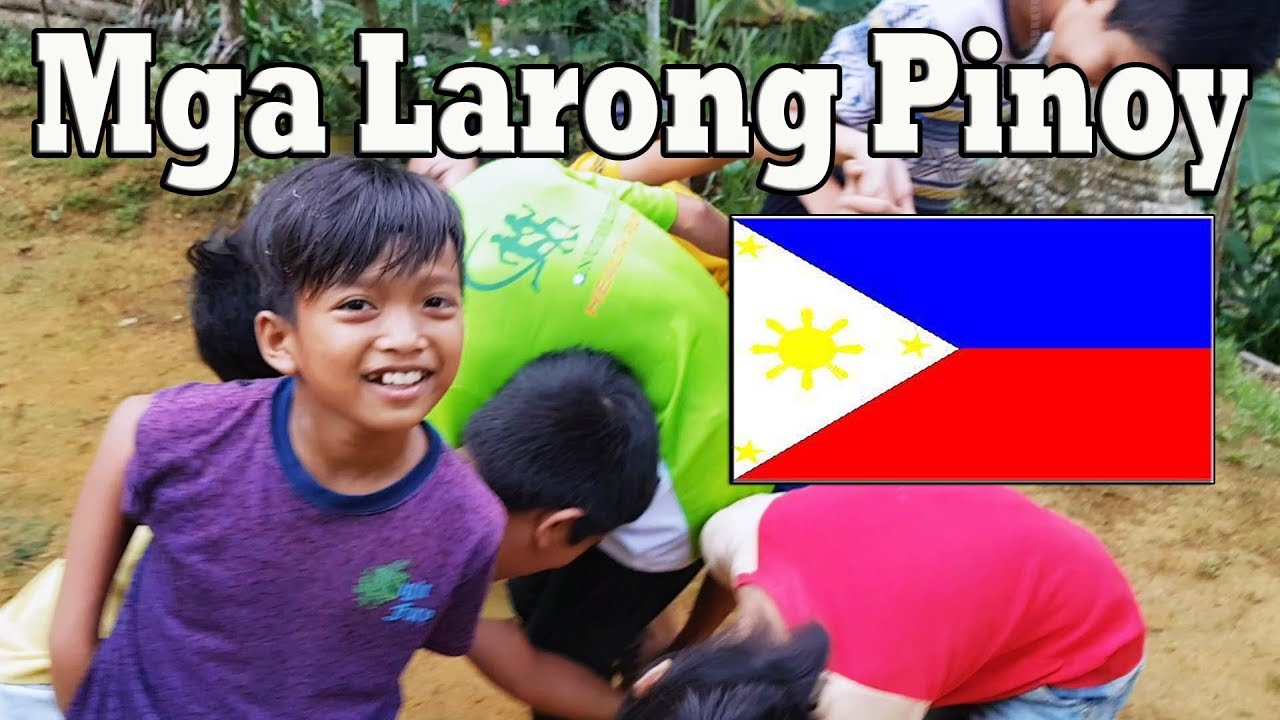
👪 How To Play Traditional and Indigenous Games in the Philippines? (Laro ng Lahi)

In this video, I'll be featuring some of Filipino Games that I used to play when I was young.
    Filipino traditional games, laro ng lahi, how to play Filipino games, indigenous games in the Philippines, Doktor Kwak Kwak game, luksong baka, traditional Filipino childhood games, Filipino street games, Filipino cultural games, Filipino heritage games, Filipino traditional play, Siato game, habulan bulag, Filipino outdoor games, Filipino kids games, Filipino cultural traditions, Filipino family games, Filipino childhood memories, how to play luksong baka, Filipino educational games, Filipino traditional activities, Philippine traditional sports, Filipino group games, Filipino team games, bato bato pik, rock paper scissors Philippines, Filipino recreational games, Filipino fun games, Filipino interactive games, Pinoy larong pambata, Pinoy games for kids, preserving Filipino culture, laro ng lahi tutorial, traditional Filipino sports.

    Doktor Kwak Kwak please help us. 


    Doktor Kwak Kwak is a game that children are fond of. You can play it in school, street, and fields. This game is composed of 5 or more players. Actually playing this game with more players will be more challenging. The more challenging the game, it will be more fun. It needs concentration, speed, and strength to play this game.

    The mechanics of the game is simple. First, to know who will be DoKtor Kwak Kwak, you can play elimination by “jack en poy” or “bato bato pik” and the loser will be Doktor Kwak Kwak. Next, He will turn back so that other players formed a circle and start to tangled or twisted their bodies and positions in a way of entering under the hands or passing above the hands of co-players while sitting down and keep their hands holding. Then, after they already finished the twisting part, they will call Doktor Kwak Kwak by saying “Doktor Kwak Kwak please help us”. Lastly, he will come and solve or arrange the twisting part. After he arranged it, he will cut by his hand the circle and other players will run. The player who will be caught by the next Doktor Kwak Kwak.

    This game can offer us a number of psychological benefits in addition to physical benefits. It can also help us to communicate effectively like in the twisting part of the game. This kind of game is cheaper than playing online games. It can enhance also our self-confidence and develop our mental ability. It can also allow ourselves to have quality time in our friends or capable family member in playing this game together.

    BAGSAK TSINELAS GAME or STARFINISH.

     - Honestly, this game is new to me - you can watch the mechanic in the vlog of Kulas #BecomingFilipino - https://youtu.be/cKf-gX5iGC0

    LUKSONG BAKA.


    Loosely translated in English, as “Jump over the Cow.”, is a traditional Filipino game that originated from Bulacan, it involves a minimum of 3 players and a maximum of 10 players. It involves the players jumping over the person called the "Baka", and the main goal of the players is to successfully jump over the "Baka" without touching or falling over him/her.

    How to play luksong baka?

    a). At the start of the game, there should be one player that should be called "Taya" (It') or in this game the "Bakang lala" (Cow).

    b). The players should avoid contact or falling over the "Baka" player while jumping over.

    c). The "Baka" player should start with a bend-down kneeling position (A "Baka" player bends over with his hands placed on his knees).

    d). All players are to jump over the "Baka" until all the players have jumped. Once the 1st set of jumping over the "Baka" is done, the "Baka" player's position will slowly rise up after jumping over the "Baka" player.

    e). Only the hands of the jumper may touch the back of the person who is bent over. If a player fails to avoid contact or falls over the "Baka", he/she will replace the "Baka" player with a bend-down kneeling position, and the game continues until all players decide to end the game.

    HABULANG BULAG.


    JAK EN POY.


    Rock-paper-scissors (or rock, paper, scissors) is a zero-sum hand game usually played between two people, in which each player simultaneously forms one of three shapes with an outstretched hand. These shapes are "rock" (a simple fist), "paper" (a flat hand), and "scissors" (a fist with the index and middle fingers together, forming a V). The game has only two possible outcomes other than a tie: a player who decides to play rock will beat another player who has chosen scissors ("rock crushes scissors") but will lose to one who has played paper ("paper covers rock"); a play of paper will lose to a play of scissors ("scissors cut paper"). If both players choose the same shape, the game is tied and is usually immediately replayed to break the tie. Other names for the game in the English-speaking world include roshambo and other orderings of the three items, sometimes with "rock" being called "stone"

    SIATO.


    Siato - a popular Filipino game between two or more players. Two sticks are used to play this game. One is about two feet long, and the other one is about half a foot long. A small hole in the ground is made where the smaller stick will be placed with one end at the bottom and the other end sticking out. The player will hit the smaller stick with the longer one so that the smaller stick flies to the air. At mid-air, the player then hits again the smaller stick with the longer one. This is repeated three times. Whoever hits it to the farthest distance wins the game. As punishment, the loser will be forced to shout the word "siato" without interruption while running back to the original starting place.

    SOCIAL MEDIA :

    Facebook : http://bit.ly/JonathanOrbuda
    Instagram - http://Instagram.com/Ilovetansyong
    Twitter - http://Twitter.com/Ilovetansyong

    Boholanos’ Unique Cultures and Practices in Celebrating Fiesta.

    San Isidro in the Province of Bohol is my birthplace. This is my motherland since birth up until I graduated in High School. And since I grew up in this place, I am very knowledgeable what are the cultures and practices of the *Isidorian people specially in celebrating the town fiesta.


    10 Things on what to expect when attending Fiesta in San Isidro.

    1. It is a well-prepared event.


    Town Fiesta is the most awaited part of the year rather than Christmas or any event. All the inhabitants are preparing the entire year just for this big happening. In fact the preparation starts right after the celebration of the preceding fiesta. Some saved money for it; some are nurturing livestock (e.g Pig, Cows, **Carabao and Chicken).  And it’s funny because if you’ll meet Isidorian people in a random setting, they will already inform you or invite you to go to their houses on upcoming fiesta knowing that there are still remaining 12 months before the celebration.

    2. The Government and The Church became ONE.


    We all knew, the Philippine constitution emphasized-the Government and the Church are two separate entities. But in San Isidro during Fiesta, this rule will be voided. Both the church and the local government unit (LGU) became one in reaching a goal – to have an extremely vibrant FIESTA (whatever will happen) .The St. Isidore Parish Church will conduct a fund raising event for the fiesta and the LGU as well.

    3. League of Basketball exists during Fiesta.

    A month or two before the fiesta, each Barangay will organize their own basketball team headed by their ****Barangay Chairman and Sangguniang Kabataan (Youth Group) to present their banner in a League of Basketball. It is already part of the Isidorian Culture. The said game usually runs in a month or two; whoever the team that will win in grand slam will be joining the championship round which usually happened during fiesta.

    4. Disco in an open field is a MUST.


    According to Isidorian, fiesta will be boring without disco. It is an event that an open party will be conducted in an open field like plaza or anything that can accommodate a massive crowd. With a minimal amount of entrance fee, you can indulge the provincial way of partying. Most of the crowd are coming from San Isidro itself, from other towns or from greater Manila area. The event will usually be held twice – besperas night and fiesta night; this is also a fund raising event for the town development.


    5. PORK LECHON is a symbol of Abundance.

    Pork Lechon during fiesta is very symbolic. Households who will prepare a Lechon are those who can only afford. Indeed, it associates of wealth.  Some purchase Lechon from the stores in Tagbilaran but majority of the houses; they’ll roast their own nurtured pig as a sign of abundance. It is also a way of giving thanks to the whole year blessings.

    6. A household without a single piece of pork during Fiesta will be cursed.

    Yes, even those households that are belong in “below poverty line”; they will forcefully find ways just to have pork during fiesta. If you promised to slaughter your nurtured pig for the upcoming fiesta, make sure to fulfill it, because if not, it is believed that it brings you bad luck to your business or family on the next year.

    Advertisement by Google:
    7. The SOCIO – concept.

    If you’re not capable of having your own lechon or slaughtering your nurtured pig because of scarcity and you plan to sell it,  that is still fine.

     In San Isidro, a SOCIO exists. It is a Bayanihan style (cooperative) of certain organizations that collected a definite amount at the start of the year from the members; and lends it with corresponding interest rate. When fiesta comes, the earned money will be bought pigs, slaughtered and divided into how many members contributed at the start of the year. So it’s advisable to join a lot of socio groups especially if you don’t have a backyard piggery. SOCIO groups can be a faculty association, driver’s association, church association , market vendor association, carpenter’s association  or you can even create your own SOCIO group as long as the money that are collected earn in 12 months.

    8. BRING HOUSE practice.

    “Bring House” is a practice during fiesta, wherein the “celebrating household” will provide giveaways to “visiting relatives and friends” from other places, to be brought to their houses.  BRING HOUSE must be in a plastic bag and it can be uncooked pork or leftover foods (suman or bibingka) from the fiesta. In fact the “celebrating household” already anticipated and allocated a portion from the prepared foods for the “bring house”.

    Indeed, it is somewhat a form of paying debt of gratitude because whenever you’ll attend a fiesta in another town, 100% you’ll be going back home with a plastic bag as well. However, you just have to return the favour when the fiesta comes in your own town.

    9. ***TAGAY as a form of respect.

    When you attend a fiesta in San Isidro, be prepared to get drunk because when you visit innumerable houses, they will offer you a glass of coconut wine. Offering a glass of coco wine to the random visitors is a gesture of welcoming them inside your house even if you don’t know them at all. Indeed, accepting the glass when you’re a random visitor is a form of respect to the owner of the house.
    My experience was ridiculous, I’ve visited innumerable relatives in one day and I have to drink one glass in each house. I wasn’t prepared for it and I was slowly become dizzy as the day started to end. I even broke my three-day old Samsung S8+ because of drunkenness.


    10. Fascinated with visitors from Manila.

    This culture, I can really understand why? If you’re coming back home to Bohol from Manila during fiesta, you’re treated like a celebrity. All their attention will be yours – both hospitality and gossip. In my experience when I went back home after 15 years to attend the fiesta, all of my relatives that I visited were happy to see me.

    Indeed, they have this thinking “ Ang yaman mo na “, without their awareness that I also suffered scarcity here in Manila.  If you are also coming from Manila, make sure to bring a symbolic pasalubong –  BWESKIT.


    Truly, Bohol culture is distinctive. There might some similarities to other provinces yet Province of Bohol is still a place that I find unique. That province might not that well-developed but I am not ashamed of it; without Bohol there will be no Tansyong living in Manila.


    *Isidorian - Inhabitants in the town of San Isidro
    ** Carabao - Water Buffalo
    ***Tagay - Cheers , a gesture of giving a glass of wine to a guest.
    ****Barangay - The smallest unit of Government. 

    Why Every Juan Do Loves To Have Cebu Lechon During Parties?


    Lechón is a pork dish in several regions of the world, most specifically Spain and its former colonial possessions throughout the world. And one of the countries that Spain colonized was Philippines, specifically Cebu. So, no wonder why Cebu has its most savoury Lechon among 88 provinces in the country. Not surprisingly, many Filipinos all over the Philippines are visiting CEBU - just to taste their flagship dish.


    Moreover, Lechon became part of Filipino’s culture. A party is incomplete without huge grilled pork on the table with an apple in the mouth. During the Spanish era, lechon has something to do with economic status in the society. Only a well-off family can afford preparing it in every celebration. Nowadays, a whole lechon is prepared in every party as a sign of victory, thanks giving and success. It symbolizes of abundant life.


    Good thing, you are no longer needs to go to Cebu just to taste it. Various entrepreneurs brought the Cebu’s taste in the urban zone of Manila.  One of them is Roland P. Peñarez- the owner of “Manong’s Cebu Lechon”.  I met the person behind this business during the Blogapalooza 2015 and luckily, I was able to taste the lechon right at his booth. And it was worth for your money.


    Truly, Lechon is Juan’s trademark. Not just because we were influenced by the Spaniards however, Filipinos undeniably love to eat. Having Lechon on our table is a sign that family members can bond and can smile together– that a Filipino Family is happy on sharing one food and LECHON can bring them together.


    For your Cebu Lechon needs, you may contact: Manong’s Lechon Cebu.
    Tel: (632)475-6875
    Sun: 0932-8805600
    Globe: 0927-7839920 
    They deliver door-to-door within Metro Manila.

    🛐 Rizalista : Religious movement or Occultism

    The Rizalista religious movement refers to the new religious movement adopted by a number of ethnic religious groups in the Philippines that believe in the divinity of Jose Rizal, the Philippines' de-facto national hero. But there are also people condemned towards the group that it may be an occultism. Join us , As “I love Tansyong “ and BSA Students from University Riza attempt to investigate.
    The Rizalistas, as they are collectively and commonly called, are different group of people having different beliefs but focuses on one faith. It is their faith to the Philippine's national hero Dr. Jose Rizal that binds them together. Generally, this group immortalizes and worships Jose Rizal as a divine being. Many of these sects or religious movements believe that Rizal is still living and that he will deliver his followers from oppression and poverty.

    Rizalist groups have differing views on the divinity of Jose Rizal. Some believe that he is God himself, some believe that Rizal was the second son of God, the reincarnation of Christ. Some of these groups also identify Rizal as the god of the pre-Spanish Malay religion. Some only see as Rizal as a spiritual guide. Leaders of the sect often claim that key people in the Philippine Revolution including Rizal himself were reincarnation of the Virgin Mary. Many of these groups claim that the only key to salvation is by joining their group

    The Rizalist religious movement ranged from colorums which were prevalent during the 1920s up to the 1930s to Philippine Benevolent Missionary Association, which was led by Ruben Ecleo. Among these movements are the Iglesia Sagarada Familia, Lipi ni Rizal, Pilipinas Watawat, the Molo and the Iglesia ng Watawat ng Lahi

    Photo credits above ( http://my_sarisari_store.typepad.com

    “SpiderKids” Only in the Philippines.


    Advertisement by Google:

    Spiders are arthropods that have eight legs and fangs that inject venom. A unique characteristic of a spider is its ability to produce silk. They weave this silk to create orbs (spider web) which they use to trap other insects that serve as their food. Spiders can be found on trees and leaves of plants. One way of catching a spider is to look for its orb, the spider is usually located at the center of the orb but if not there then probably it’s in a nearby leaf connected to the orb. As a tip, you can easily catch a spider at dawn because it is during this time that they weave their orbs but if you’re not lucky in catching one you can also try catching spiders early in the morning before sunrise.

    Spider derby is a popular blood sport among Filipino children. The game is played by carefully placing to spiders at the opposite sides of a stick. One of the kids will grab the center of the stick and will guide each spider to move to the center where the action begins. The child will switch grip from one end to another to ensure that the spiders will not escape. The game will continue until one spider is dead, wrapped in silk, or falls from the stick.

    We Filipinos have long been a fan of the derbies, as a matter of fact we have a lot of popular derbies here like cockfights, dogfight, and we even have our own version of bullfighting which is interesting because we use two male Carabao’s. Indeed spider derby has become a part of our culture. I have to admit that its very entertaining compared to video/computer games. The pleasure of playing games like these with your friends are a moment to be treasured. Lately, I have been an avid fan of Marvel Avengers Alliance;  a game on facebook that  features Spiderman as one of its characters but after looking at the photo on top I realized that we Filipinos are truly Amazing. Imagine we have our own version of Spiderman- It’s more fun in the Philippines!
     Allan Aban
    Guest Writer 

    Thanksgiving Day in the Philippines

    Thanksgiving by merely offer a small prayer of thanks to the Lord and celebrate with a feast and without official date and month thats how Fililipino practice "Thanks Giving" or simply Pasasalamat (Photo from Wikipedia)
    Advertisement by Google:
    We observed the holidays during November like the All Saint’s Day (Nov.1) and All Soul’s Day (Nov. 2), and Bonifacio Day (Nov.30), but if you are working in an American company particularly in the BPO sector, for every fourth Thursday in November they observed and celebrated Happy Thanksgiving Day which some companies will declare a non-working Holiday since most of the people living in the United States celebrate annually the most important holiday ever since the first colonist from Europe landed in Plymouth, Massachusetts during the 17th Century.

     In the Philippines, American expatriates will make preparation in celebrating the most important holiday of the year and will flock to the groceries where Turkey the main feast is available in every cold storage and even recipes for Apple Pie, Pumpkin soup and other American dishes is also available.  Filipinos living in the United States also celebrate Thanksgiving Day and relatives from all over State will visit their family and friends and feast to the most important day of November.
    Sculptures at Fort Bonifacio  Taguig b y Ferdinand R. Cacnio as form of “Pasasalamat” (Photo byAmado L. Castro, Jr.)
    But there is one question in mind,  Do we Celebrate Thanksgiving Day in the Philippines and how?  Yes we do celebrate Happy Thanksgiving, but in a different setting.  Unlike in the United States, that has a certain date and month and declared a National holiday, in Filipino tradition we celebrate Thanksgiving by merely offer a small prayer of thanks to the Lord and celebrate with a feast and without official date and month.  If you are one of the elites in the society will celebrate with the Lechon Baka or Lechon de Leche as the main feast, but for simple celebration any feast that is acceptable as long we offer our thanks to our significant accomplishments.

    We celebrate thanksgiving by means of having surpassed an ordeal and other important events such as: 


     1) Graduation not only in colleges, but also in High School elementary and even preparatory, since it is the most important occasion not only for the child who graduated and finish his or her studies, but for the parent’s hardship of sacrificing their lives no matter what manner of job they have to inflict to as long as their children finish their studies and move to a better future.


    2)  Passing the Board or Bar Exams is another achievement to only few who succeeded in obtaining a license and will take a Hippocratic Oath (not Hypocrisy Oath to some professions) and will have the most grandiose celebration and will invite all the members of the barangay for this egoistical event, while others will just offer prayers and donate wheelchairs to the one who needed the most. 
    Photo by Dave Donovan
    3) Company Promotions sometimes is just more of a shallow approach of ‘I’m here you’re down there,” we do not know what manner or the cause of his or her promotion but sometime they feel like celebrating not through feast but through gimmicks and blowouts.  

    4)  Success in business is particularly that the Boss or the Manager will treat his or her subordinates a small feast like ordering a pizza and if glamorous will call catering services and of course prayers were also included in the program.
    OFW Homecoming (photo by Aileen Adalid)
    5)  Homecoming is most important especially to the love ones who is working abroad. Or Manny Paquiao Homecoming and Meagan Young Homecoming


    6)  Having a new car was really something for the middle or working class Filipinos, because owing a brand new car is not a common trait to the Filipinos because of the socio-economic issues in the Philippines. Whether is a company issued and purchased by the hard-working individual, we tend to celebrate by presenting the new car to the priest to be blessed and go out and celebrating.

    A native Filipino harvesting
     (photo by http://filipinolifeinpictures.wordpress.com)
    7)  Harvest time, farmers in the rural Philippines whenever they made a bountiful harvest, most of the communities will share what they can offer in the table and the whole community will start celebrating with a prayer and bountiful feast.


    If you notice that Filipinos no matter what type of event, they often start the celebration with a prayer of thanks, which is a genuine trait of every hard working Filipinos no matter what level of society he or she belongs to.  Even before the Spanish came, ancient Filipinos were not stranger for thanksgiving whenever they had a good harvest, winning a war, and of course the special day for the Datu of the tribe.

    Thanksgiving will always be a part of our culture even before the Americans came and introduce a type of Thanksgiving in which Turkey and Apple Pie was introduced in islands during the American Colonial period.

    Rommel Caguiat
    Guest Writer
    (Disclaimer: Images being used courtesy of Google. ) 

    The Cosplay Culture in the Philippines

    A baby cosplayer, she was very cute

    Cosplay is short for "costume play", it is a performance art in which participants wear costumes and accessories to represent a specific character or idea. Cosplayers or those who wears the costumes often interact to create a subculture centered on role play. Cosplay costumes vary greatly and can range from simple themed clothing to highly detailed costumes.

    I was very entertained when I roved around the area I saw a lot of cosplayers were roaming also around. Due to their colorful and visually pleasant costumes, you can’t really ignore them instead what I did was asking them to pose with Tansyong.

    Advertisement by Google:
    While watching, the event most of the cosplayer are in teenage group. I asked one of the Cosplayer, “ Magastos ba ang ganyang hilig(Is it expensive vice )”. “Yes Kuya, We usually allocate a certain portion from our school allowance just to buy costumes and wig”, A cosplayer answered. “Yung iba naman kuya, sila na mismo gumagawa ng costumes nila from recycled materials” another cosplayer answered.


    I spent one hour for picture taking to them, while staring and comparing their costumes. I noticed that there were made of recycled materials and there were also “expensive costumes” based on the designs. Undeniably, with this kind of interest, it really need also sacrifice. Sacrifice you school allowance or spent lot money just to pursue this cosplay culture.

    Costume play culture and its rapid growth in the number of people cosplaying as a hobby started since 1990 has made the phenomenon a significant aspect of popular culture. This is particularly the case in Asia, where cosplay influences Japanese street fashion. But, now even Philippines adopted this kind of art.

    Moreover, in the Philippines we have Alodia Almira Arraiza Gosiengfiao (born March 9, 1988) who is a very popular Filipina cosplayer. She was named by UNO Magazine as one of the Most Influential Women in the Philippines due to his popularity of being an artist of Costumes. Due to her constant contribution to the cosplay community in the Philippines, Gosiengfiao has been invited into various international cosplay conventions and events as a participant, performer, and judge or simply to attend as a guest.

    Not only women are hooked by this form of art but also teenage men exist in every contest.

    I’ll be posting below the pictures :


    DON'T MISS

    Money, Fitness and Sport, Culture, Tradition, Delicacy,Churches,Religion,Tradition
    ILoveTansyongᵀᴹ |